On behalf of the Nominating Committee, I’m pleased to share the slate of candidates for the 2026 board election. Every active member organisation is invited to submit a ballot to elect the incoming board class.
We’re providing a summary of the board’s July 2026 meeting. The July board meeting is our only in-person meeting. The board gathers for two days of strategic thinking and long-range planning, as well as conducting annual board business. This year, we focused on allocating surplus funds we have on hand to invest in a three-year project to redesign the content system. In a related discussion, we decided to lower content registration fees starting in 2027 because we’ve had a demonstrated history of generating surpluses, exceeding what we need to run Crossref. We also discussed the board structure, as part of our regular review of stakeholder governance. And we conducted annual board business, such as approving the audited financial statements and reviewed our risk register and mitigation plans.
The resolutions are available on the dedicated section of our website, which also lists the members of the Board and offers further information about our governance.
We also managed to squeeze in watching a World Cup game over dinner.
Starting today, funder names deposited in Crossref metadata without an identifier will be matched to ROR IDs, to support an open and connected Research Nexus. Funding information is an increasingly important part of the scholarly record. The improved matching strategy supports researchers, funders, institutions, and meta-researchers, who rely on that information to understand how research is supported and what outcomes that support produces.
Strengthening Scholarly Publishing in Africa is a collaborative webinar series bringing together ASSAf, Crossref, DOAJ, EIFL, and PKP to share practical guidance, resources, and approaches for strengthening the publishing ecosystem in the region. This series responds to the growing interest in open access, digital publishing, stronger editorial practices, and greater visibility of research publishing across Africa. Each partner organisation has long experience of building that capacity in the area of their expertise. In this series, we’re coming together to offer a more holistic learning experience to the community of African publishers, putting different aspects of the publishing process in their broader context.
Crossref Ambassadors act as local points of contact, meeting editors, librarians, researchers, and institutions to help them navigate Crossref services and understand how strong metadata supports visibility, integrity, and trust in research. They explain how to participate in our rich network of connections between works, people, and institutions, in ways that make sense in their own contexts. And last year, being our 25th anniversary, Ambassadors also massively contributed to our celebrations!
In 2025, the Crossref Ambassador Programme continued to grow globally with 51 volunteers from 41 countries. We were delighted to welcome five new Ambassadors: Ahmet Anıl Müngen (Turkey), Mokheseng Richard Buti (South Africa), Richard Risasi (Democratic Republic of the Congo), Pedro López Casique (Mexico), and Nadia Boutaleb (Morocco).
During the year, Ambassadors promoted the value of robust metadata through webinars, including Metadata Health Check sessions in Arabic, Bahasa, French and Turkish, alongside conference participation and institutional visits across their regions. While others were more active in the Crossref Community Forum, bringing questions from their communities and contributing to discussions that helped others learn and problem-solve together.
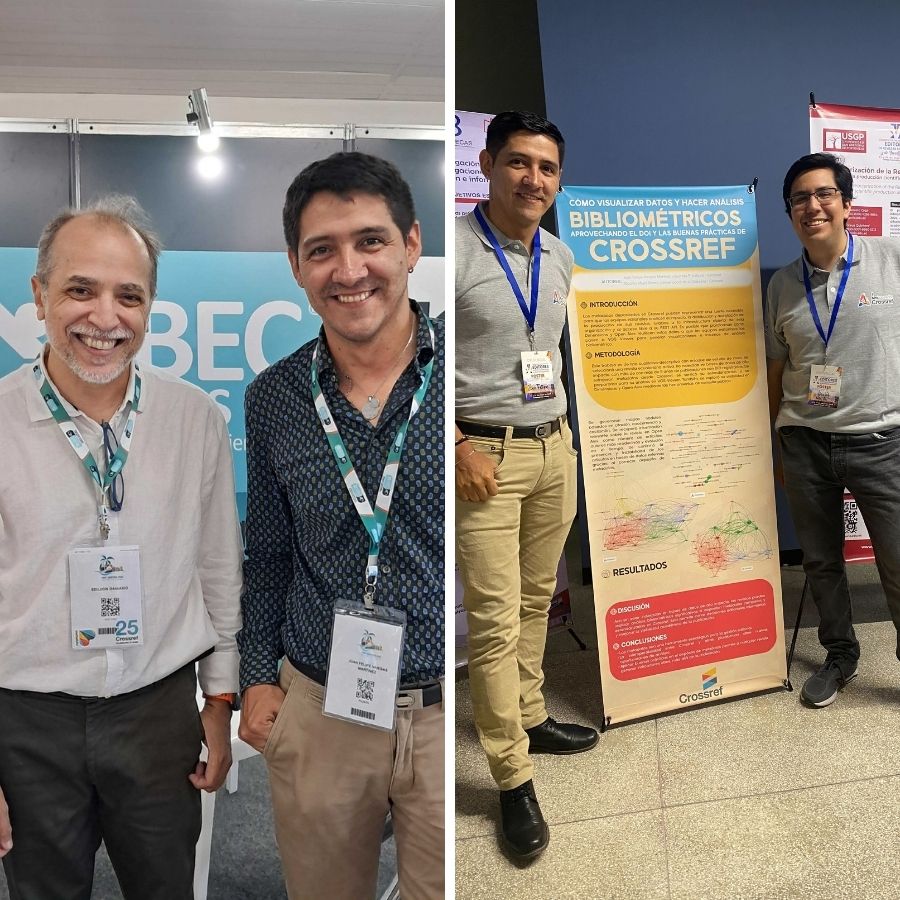
ABEC Conference 2025 in Brazil and the 5th Latin American Scientific Journal Editors and Researchers Congress in Colombia, with Crossref Ambassadors engaging editors and researchers.
Highlights
We endeavour to stay in touch with our communities locally, and Ambassadors play a critical role in these efforts. Ambassadors joined the first Metadata Sprint in Spain, supported engagement at the Beijing International Book Fair, and co-organised local Crossref events, such as Crossref Quito and Crossref Accra. Others played active roles in the Global Equitable Membership (GEM) program, engaging communities in Sri Lanka, Tanzania, Ghana, and Senegal.
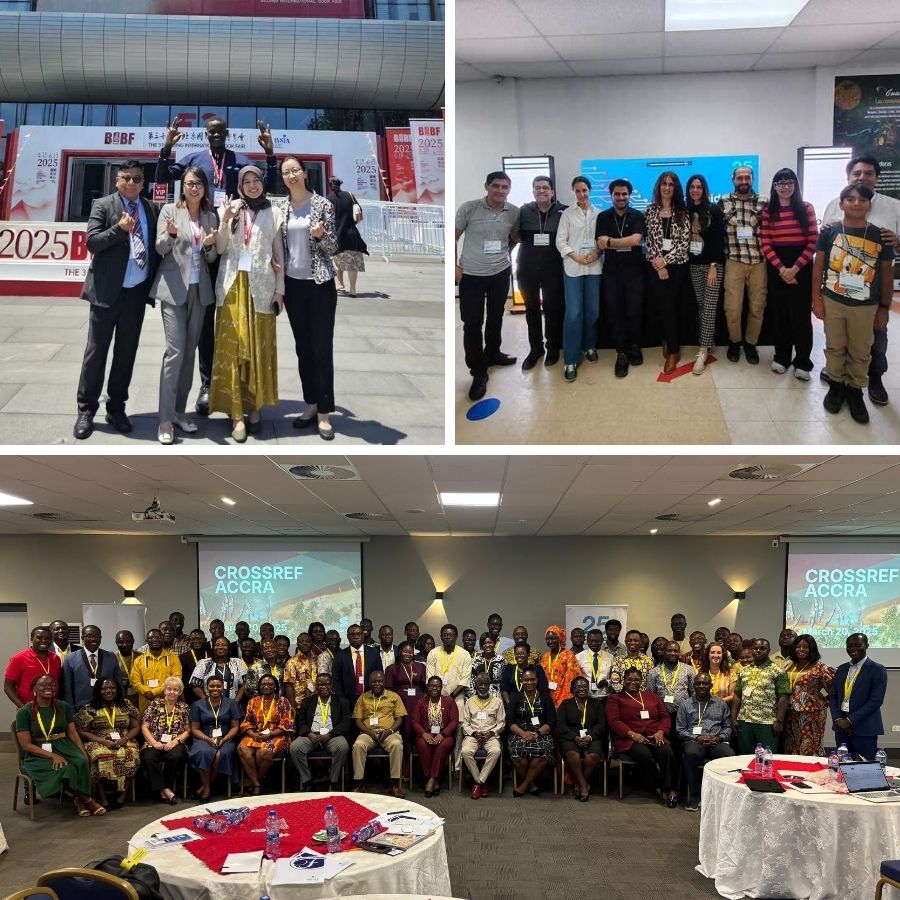
Ambassadors connecting with the scholarly community at the Beijing International Book Fair (China)(upper left), Crossref Quito (Ecuador)(upper right), and Crossref Accra (Ghana).
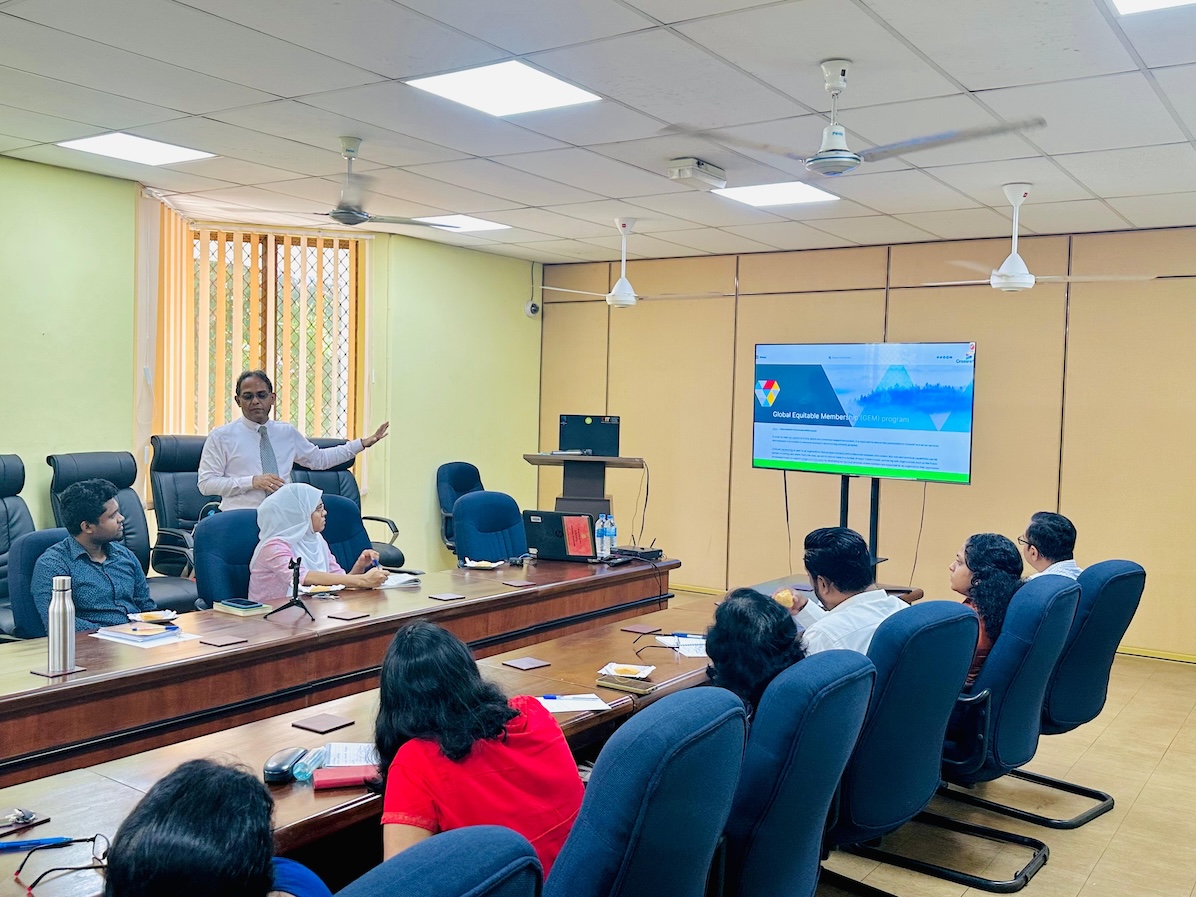
Dr. Lasith Gunawardena leading a GEM programme workshop at the University of Colombo, Sri Lanka.
Some Ambassadors delivered metadata health check sessions in French, Turkish, Bahasa, and Spanish. Several institutions supported by Ambassadors went on to become new Crossref members, while others began conversations about improving their metadata completeness.
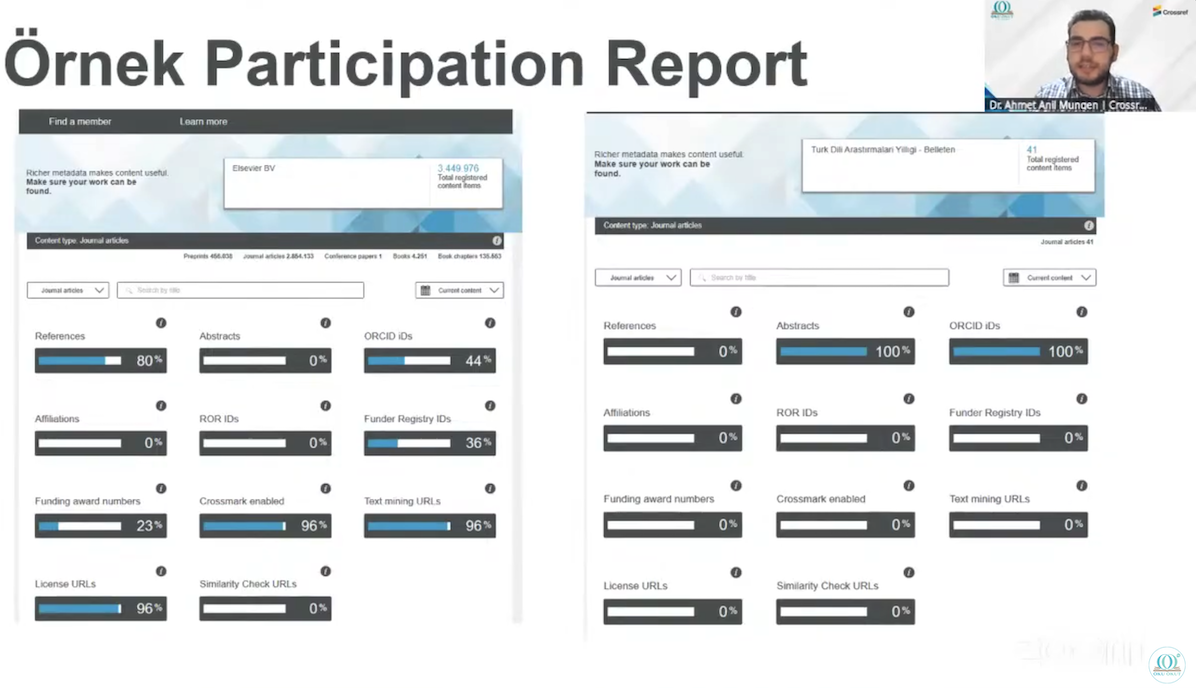
Crossref Ambassador Ahmet Anıl Müngen hosting a Metadata Health Check webinar in Turkish.
Ambassadors contribute their understanding of the industry and local contexts, and their communities’ feedback into Crossref, too. Nicolás Mejía Torres, Juan Felipe Vargas, Ahmed Moustafa, Sandra Gisela Martín and Guo Xiaofeng have recently joined our new Metadata Advisory Group, where they support us to craft our metadata for the future in tune with the community’s needs, and in particular, helping us shape how we reflect global scholarship through multilingual metadata.
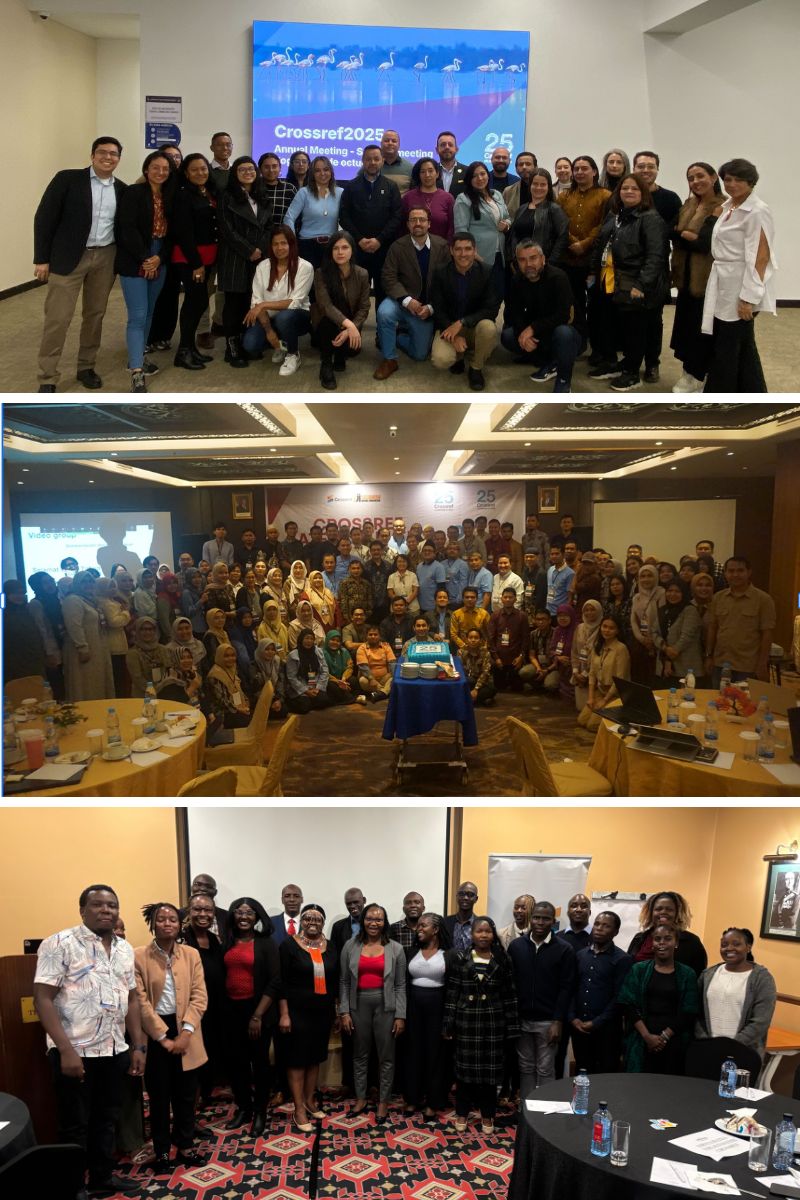
To mark Crossref’s 25th anniversary, a celebratory series of Ambassador-led satellite events was hosted to coincide with the Annual Meeting. These events, held in Nairobi (Kenya), Bogotá (Colombia), and Medan (Indonesia), featured workshops, presentations, and a watch party, allowing attendees to synchronously join the main live annual meeting program.
Crossref satellite events bringing local communities together in Bogotá (top), Medan (center), and Nairobi (bottom).
Many of our Ambassadors routinely organise virtual meetings and webinars. Recognising the growing need for effective online engagement, we partnered with the Centre for Scientific Collaboration and Community Engagement (CSCCE) to deliver a targeted training program focused on the advanced skills of convening and facilitating highly engaging and interactive online events. This intensive training was designed to provide our Ambassadors with practical techniques and resources for maximising participant involvement, fostering dynamic discussions, and ensuring that their online gatherings are both productive and stimulating. Equipping Ambassadors in this way ultimately strengthens the overall effectiveness of their outreach and community-building efforts.
Challenges & lessons learned
Alongside successes in their roles as Crossref Ambassadors, many balanced the role alongside demanding professional responsibilities, while others encountered language gaps or uneven awareness of Crossref across their regions. In some contexts, limited institutional readiness or infrastructure meant that engagement required more foundational work and patience.
These experiences offered valuable lessons, including the importance of demonstrations, translated reference and training materials, and more regionally tailored support.
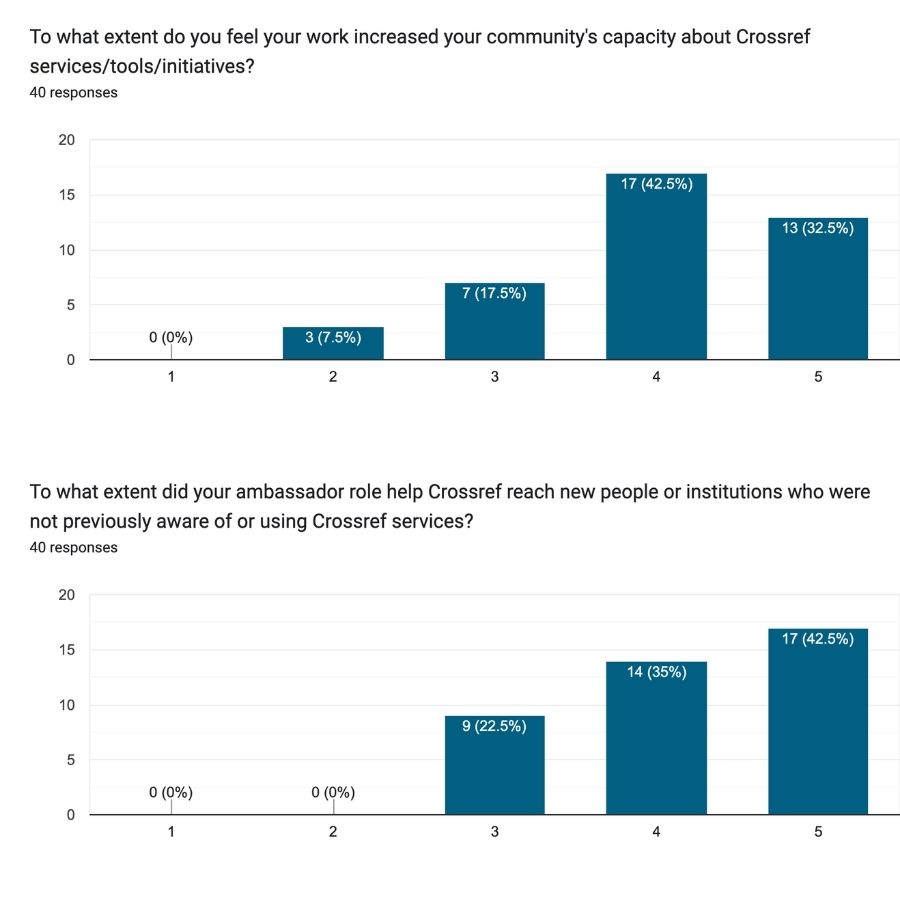
The impact of the programme was also reflected through Ambassador feedback. In the annual survey, most reported feeling that their work had significantly increased their community’s capacity to understand and use Crossref services. Similarly, Ambassadors reported that their role helped Crossref reach new people and institutions that were previously unaware of Crossref.
Survey results showing how Ambassadors increased community capacity around Crossref services and helped reach new institutions (40 of 51 responses).
In 2025, Ambassadors delivered 43 activities, including training sessions, webinars, events, translations, and feedback on tools and services both individually and collaboratively, reaching more than 1,200 people worldwide.
In 2026, the priority for the program includes strengthening regional and multilingual outreach, increasing visibility of the Ambassador role, expanding access to up-to-date resources and tools, and creating more opportunities to connect with Crossref staff.